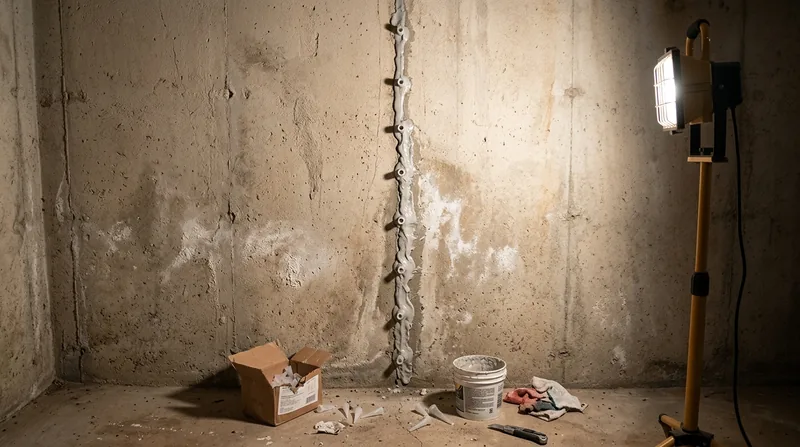


If you have a cracked foundation wall in Norwich, you already know the routine: a hairline at the block joint in the spring, a brown stain spreading across the floor after a nor'easter, and that damp smell in the basement that never quite goes away. Foundation Crack Repair in Norwich starts with reading the crack, not just filling it. The city's housing stock tells the story: fieldstone and granite walls in Norwichtown and Chelsea, block and brick foundations in the Greeneville and Taftville triple-deckers, and poured concrete walkouts on the Yantic and Thamesville hillsides. Each one cracks for a different reason, and each one needs a different repair. We inspect, diagnose, and match the method to the wall. Call (860) 300-2529 to schedule a look, or start with a free basement inspection.
Why Foundation Cracks Open Up in Norwich's Glacial Till and River Flats
Norwich sits on glacial till over bedrock on the hills and sandy outwash down along the Thames, Yantic, and Shetucket rivers. That geology drives the crack pattern. On the hills, freeze-thaw cycles work the soil and push against old mortar joints. In the low river flats, a high water table keeps hydrostatic pressure on the footing drain long after the storm passes. The result is the same call we get every March and April: water in the basement, and a crack that was not there in November.
- Fieldstone and granite walls in Norwichtown weep through mortar joints rather than cracking cleanly, so injection alone rarely solves them.
- Block and brick foundations in Greeneville and Taftville crack along the mortar bed and at the corner returns.
- Poured concrete walls on the Yantic slopes show vertical shrinkage cracks and, in wet years, diagonal cracks that signal movement.
- Efflorescence on the wall face is the tell that water has been moving through the concrete for a while.
Reading those signs correctly is the difference between a $450 injection and a repair that fails again by the next spring melt.
Key info: A hairline vertical crack in a Taftville block wall and a stair-step crack in a 1920s Greeneville brick foundation are not the same repair. The first is usually an injection job. The second needs the wall movement evaluated before anyone touches a caulk gun.
For the official word on what triggers a permit in Norwich, check the city's building department pages at norwichct.org; thresholds vary and should always be verified before structural work begins.
How We Diagnose and Repair a Foundation Crack in Norwich
We do not sell one method. We walk the basement, map the crack, check for bowing with a plumb line, and look at how the wall meets the floor and the footing. Then we pick the repair that fits the failure. Most non-structural cracks get injected. Structural movement gets strapped or anchored. Water coming through the cove joint gets a drainage answer, not a patch.
- We inspect the crack width, direction, and whether it is active or dormant, and note any efflorescence or rust staining.
- We check the wall for bowing and the floor for heaving, because those change the repair entirely.
- We drill and set injection ports at the correct spacing for the crack width and wall material.
- We inject epoxy for structural, tight cracks, or polyurethane for active leaks and wider voids that need to expand and seal.
- We finish the surface, clean up, and walk you through what to watch for over the next wet season.
If the inspection shows the crack is a symptom of hydrostatic pressure rather than a standalone defect, we say so and point you toward the right fix, often an interior drain tile system rather than repeated injections.
Key info: On a 1950s ranch off Yantic Road, a vertical crack in the poured wall leaked every spring. Injection sealed it in an afternoon. On a Norwichtown fieldstone cellar, the same symptom traced back to a failed footing drain, and the honest answer was drainage work, not a crack patch.
Crack Repair Methods We Use and When Each One Fits
Every crack gets matched to a method based on width, activity, wall material, and whether the wall is moving. The table below is the short version of how we decide on site.
| Approach | Description | Best for |
|---|---|---|
| Epoxy injection | Ports set along the crack, epoxy injected under pressure to bond the concrete back together. | Tight, non-structural vertical cracks in poured walls. |
| Polyurethane injection | Flexible foam that expands and seals active leaks and wider voids. | Active leaks, block walls, and cracks that move seasonally. |
| Surface sealing and parging | Hydraulic cement or masonry patch over weeping mortar joints and stone walls. | Fieldstone and granite cellars with porous mortar. |
| Carbon fiber straps | Straps anchored to the wall to arrest inward movement. | Cracks paired with early bowing in block walls. |
| Wall anchors | Anchors driven into stable soil and tied to the wall to pull it back over time. | Walls already bowing under wet soil pressure. |
When the crack has a structural cause, we bring in the same approach used on our bowing wall repair work rather than masking the symptom.
Foundation Crack Repair Cost in Norwich: What to Expect
Most single-crack injections in Norwich start at $450. That covers a standard vertical crack in a poured or block wall, including ports, material, and cleanup. From there, the number moves with access, crack length, wall material, and whether the wall is moving. A fieldstone cellar in Norwichtown that needs mortar work is a different scope than a clean poured crack in a Thamesville ranch.
Several factors push the price up: tight basement access, cracks that run floor to ceiling, multiple cracks, and any sign of bowing that requires straps or anchors. Active leaks that need polyurethane rather than epoxy also change the material cost. We give a written scope before work starts, and we tell you plainly when sealing is enough and when the real problem is hydrostatic pressure. If you want a full breakdown, see our pricing page. Getting two or three estimates is smart, and we would rather you compare scopes than compare a single number.
What to Look For When Hiring Foundation Crack Repair Near Me in Norwich
Hiring for crack repair near Norwich means asking a few direct questions before anyone drills a port. Ask whether the company is licensed and insured, and ask for the certificate. Ask how they decide between epoxy and polyurethane, because a firm that only sells one method will sell you that method. Ask whether they pull permits when the work touches structural repair or drainage connections, and confirm the local building department's requirements. Ask for references from jobs like yours, especially older stone or block foundations.
A good contractor will tell you when a crack does not need injection, and when the water is coming from the cove joint rather than the wall. If the answer to every question is a sales pitch, keep calling. You can reach us through the contact page for a straight assessment of what your wall actually needs.
Foundation Crack Repair Near Me: Seasonal Timing Across Norwich
Crack calls in Norwich cluster around the spring melt and the nor'easter season. Freeze-thaw cycles on the Yantic and Thamesville hillsides open joints through the winter, and the water shows up in March and April. The river flats along the Thames and Shetucket hold water long after a storm, so a crack that stays quiet in a dry summer can leak hard in a wet fall. Late summer and early fall are the best time to inject a dormant crack, because the wall is dry and the repair cures before the next wet cycle.
If you are seeing water now, do not wait for the season to change. Call (860) 300-2529 and we will tell you whether it is an injection job or a drainage problem.
Foundation Crack Repair in Norwich: Pricing Guide
| Service | Price | Details |
|---|---|---|
| Single crack epoxy injection | Starting at $450 | Covers one standard vertical crack in poured or block wall, ports, epoxy, and cleanup included. |
| Active leak polyurethane injection | Starting at $550 | Flexible foam for cracks that are actively leaking or moving with seasonal soil pressure. |
| Multiple crack repair | Starting at $850 | Priced per crack after inspection; total depends on crack count, length, and wall access. |
| Structural repair with straps or anchors | On estimate | Requires on-site evaluation of bowing, soil pressure, and wall condition before quoting. |
| Travel | Included | In Norwich and surrounding areas, no separate call-out or mileage fee. |
| Estimate | Free | Response within 24h at (860) 300-2529, no obligation to book. |
Indicative pricing, the exact cost depends on square footage, finish, and site access. Free personalized estimate within 24h at (860) 300-2529.


